Feeds:
Posts
Comments

Archive for the ‘News & Commentary’ Category

The tragic events of April 15th continue to unfold.  Today, two bombs exploded in the packed streets near the finish line of the Boston Marathon, killing two people and injuring more than 130.

Please continue to pray for the families who are mourning the loss of a loved one.  Boston area hospitals also reported at least 134 injured, with 15 of them critically.  We also need to pray for the wounded who are in critical condition.

While not immediately apparent, we should also praise God that more were not injured in this senseless act.  The Boston Marathon routinely has some 23,000 runners and countless supporters along the way.  It is one of the world’s oldest and most prestigious marathons that draws participants from across the globe.  It is held on Patriots Day, which commemorates the first battles of the American Revolution, at Concord and Lexington in 1775.

As people continue to compile their prayer lists, we should also remember first responders like the EMS, police, firefighters, and National Guard.  Their efforts today, though bloody and traumatic, helped to preserve life and provide emergency care to the wounded.

Cry out to the Lord and share the concerns of your heart, no matter how heavy it may be.

Read Full Post »

moh

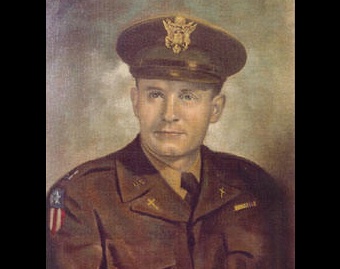
Today President Barack Obama posthumously awarded the legendary Roman Catholic priest from Pilsen, Kansas, the nation’s highest military honor, making him the sixth chaplain to receive the Medal of Honor.

Chaplain (CPT) Emil Kapaun was posthumously awarded the medal of honor for his selfless service and heroic efforts during the Korean War.  He repeatedly risked his own life to aid wounded soldiers and keep their faith while in captivity.

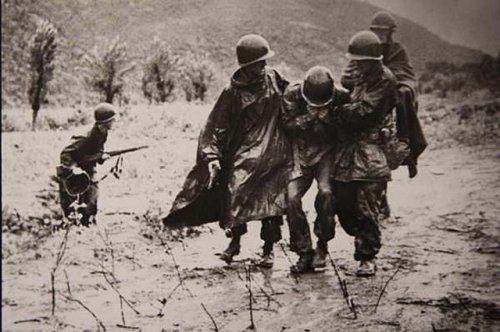
During the Battle of Unsan, Kapaun was serving with the 3rd Battalion of the 8th Cavalry Regiment. As Chinese Communist forces encircled the battalion, Kapaun moved fearlessly from foxhole to foxhole under direct enemy fire in order to provide comfort and reassurance to the outnumbered Soldiers. He repeatedly exposed himself to enemy fire to recover wounded men, dragging them to safety. When he couldn’t drag them, he dug shallow trenches to shield them from enemy fire. As Chinese forces closed in, Kapaun rejected several chances to escape, instead volunteering to stay behind and care for the wounded.

Herbert Miller remembers the first time he saw Chaplain Kapaun.  It was November 1950 and Miller, an Army sergeant, had a gun pointed at his head by a Chinese soldier.  Miller lay in a frozen, blood-stained ditch in North Korea.  Hit by a hand grenade, his ankle broken, Miller figured he was a goner.  But then, seemingly out of nowhere, a soldier bearing a small cross on his helmet appeared.

“Chaplain Kapaun came from across the road,” Miller recalled. “He pushed that man aside. He picked me up and carried me. We were both captured at that time.  “I kept telling him, ‘You can’t carry me like that. You put me down,’ ” Miller said, worried he was too much of a physical burden for the slender Kapaun. “He said, ‘If I put you down, they’ll shoot you.’ ”

After he was captured, Kapaun and other prisoners were forced to march into enemy territory toward prisoner-of-war camps. During the march Kapaun led by example in caring for injured Soldiers, carrying the wounded on stretchers, and encouraging others to do their part.

Once inside the dismal prison camps, Kapaun risked his life by sneaking around the camp after dark, foraging for food, caring for the sick, and encouraging his fellow Soldiers to sustain their faith and their humanity. On at least one occasion, he was brutally punished for his disobedience, being forced to sit outside in subzero weather without any garments. When the Chinese instituted a mandatory re-education program, Kapaun patiently and politely rejected every theory put forth by the instructors. Later, Kapaun openly flouted his captors by conducting a sunrise service on Easter morning, 1951.

After coming down with a bout of dysentery accompanied by pneumonia, Kapaun was sent to the camp’s “hospital,” which POWs called the “death house,” a place with little-to-no medical care. As he was being carried to the hospital, he asked God’s forgiveness for his captors, and made his fellow prisoners promise to keep their faith.   Kapaun died two days later, on May 23, 1951, at the age of 35.

Chaplain Emil J. Kapaun repeatedly risked his own life to save the lives of hundreds of fellow Americans. His extraordinary courage, faith, and leadership inspired thousands of prisoners to survive hellish conditions, and retain their faith in God and country.

Read Full Post »

kapaun

Thursday will mark another milestone for Army chaplains.  Chaplain (CPT) Emil Kapaun will receive the Medal of Honor posthumously for his heroic and selfless acts of November, 1950.

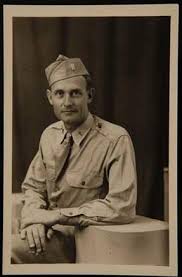
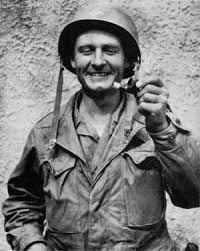
Kapaun was a Kansas native.  He was born on April 20, 1916 and was raised on a farm near Pilsen.  In 1940 he was ordained as a Roman Catholic priest at what is now Newman University in Wichita, Kansas.  He became a military chaplain with the US Army in 1944.  He was sent to India and served in the Burma Theater.  He was one of many chaplains who rejoined the military during the early days of the Korean War.

Below is a column from Mark W. Johnson, Ph.D., Branch Historian, U.S. Army Chaplain Corps, describing the events and lives of eight Army chaplains during the early part of that conflict.

Under Fire:  Chaplains in Korea, 1950


jeep-kapaun

The start of hostilities in Korea during June 1950 caught most American officials off guard, and those in charge of the U.S. Army Chaplain Corps were no exception. For the previous five years, America’s military focus had been on divesting itself of the huge force that had been employed during World War Two. There were 8,141 Army chaplains on active duty as that war ended in 1945; by the end of 1947, only a little more than 1,100 remained. Nearly 500 of those transferred to the recently-established U.S. Air Force in 1949. On the eve of the North Korean attack on South Korea, there were 706 active duty Army chaplains, with more in the National Guard and U.S. Army Reserve.

With war again a reality in 1950, the Army had to rapidly expand. Having just gone through the painful process of involuntarily releasing chaplains from active duty and forcing them into reserve status, the Chaplain Corps now had to reverse the process and recall reserve chaplains to active duty. Chaplain authorizations would more than double in the coming years, topping out at 1,618 in 1953. Even though numerous chaplains entered the active force through reserve component mobilizations, individual recalls, and an intense recruiting effort, the number of chaplains serving never matched what was authorized. Many veterans of World War Two were understandably reluctant to volunteer for combat duty again, and popular support for the war would wane during its final years as the conflict devolved into a stalemate.

kapaun-bike

While America mobilized in 1950, America’s Army went to war. The first American ground forces to deploy to Korea were the divisions that had been stationed in Japan as occupation forces following World War Two. In trying to stem the tide that was the North Korean invasion of South Korea, many hastily-deployed American units found themselves in desperate situations; it often came down to more of a battle for survival than it was an attempt to inflict harm on the enemy. Chaplains assigned to those units found themselves spending far more time comforting the wounded and praying for the fallen–and trying to evade capture–than they did in ministering to the living.

The first chaplain to serve in Korea deployed there with the initial American ground force to enter the conflict: Task Force Smith, an under strength battalion of the 24th Infantry Division’s 21st Infantry Regiment. The battalion’s chaplain, Carl R. Hudson, had been looking forward to a routine tour of garrison duty in Japan upon his assignment to the unit a few weeks beforehand. Chaplain Hudson and the rest of the task force’s 540 soldiers had little time to do anything after settling into a defense position just north of the town of Osan during the early morning hours of July 5, 1950. A large force of North Korean tanks and infantry attacked just a few hours later. By early afternoon the task force was completely overrun, its survivors scattered. Chaplain Hudson, along with the battalion’s surgeon and a large group of walking wounded, spent most of the following night and day making their way southward to the safety of the nearest American unit.
kapaun-carry

Other chaplains of the 24th Infantry Division had experiences similar to that of Hudson during that difficult month of July 1950, narrowly escaping as one American position after another fell before the North Korean advance. All survived, with the exception of Chaplain Herman G. Felhoelter of the 19th Infantry Regiment. With his battalion falling back as the American position along the Kum River collapsed, Felhoelter volunteered to remain behind with a group of critically wounded men. A North Korean patrol came upon the group and executed the prostrate soldiers and their praying chaplain. Felhoelter was the first of twelve chaplains to die in action or as a prisoner during the Korean War. The second also perished in July 1950, when Chaplain Byron D. Lee of the 35th Infantry Regiment (25th Infantry Division) was mortally wounded during an attack from an enemy aircraft.

Amazingly enough, no chaplains were captured during those confusing initial months of the Korean War despite all the American setbacks. That would change within a few months, however. After the front stabilized at the Pusan Perimeter and then the Inchon Invasion changed the strategic focus of the war, during the final months of 1950 American units and other forces of the United Nations command no longer retreated but instead advanced deep into North Korean territory. China entered the war in October 1950, when American and South Korean troops approached the Yalu River, the border between Korea and China. The first major American-Chinese clash took place near the town of Unsan during the first week of November, when a powerful Chinese attack overwhelmed the 1st Cavalry Division’s 8th Cavalry Regiment. The regiment’s battered 1st and 2d battalions managed to withdraw, but the 3d battalion was surrounded and largely annihilated. The 3d battalion’s chaplain, Emil J. Kapaun, was captured.
kapaun-sit

The 1950 Chinese counteroffensive generated heavy casualties on both sides. Within a month of Kapaun’s capture, three more chaplains also became prisoners of war: Kenneth C. Hyslop (19th Infantry Regiment), Wayne H. Burdue (2d Engineer Battalion, 2d Infantry Division), and Lawrence F. Brunnert (32d Infantry Regiment, 7th Infantry Division). Two other chaplains were killed during those weeks: Samuel R. Simpson (38th Infantry Regiment, 2d Infantry Division) and James W. Conner (31st Infantry Regiment, 7th Infantry Division). The fate of the four captured chaplains was unknown until the release of surviving American prisoners in 1953. Sadly, none of the four chaplain POWs survived their incarcerations.

For the opening battles of the Korean War, as with most wars, those who are already in uniform at the start of the conflict bore the burden of the opening battles. The eight chaplains lost in 1950 were all members of the pre-war Chaplain Corps. Six were veterans of World War Two. Burdue, Lee, and Simpson had served continuously since the 1940s without a break in service. Hyslop, Kapaun, and Felhoelter also served in World War Two, but were released from active duty in 1946. Within two years, however, they decided to continue their service to God and country; all three volunteered for recall to active duty in 1948. Conner and Brunnert joined the others in the pre-war era, being commissioned in 1948 and 1949 respectively.
kapaun-pipe

None of these eight veteran chaplains knew what the year 1950 would bring, but all rose to the challenges that came with ministering to Soldiers under fire. Only a few received public recognition for the actions that ultimately cost them their lives: Conner was awarded the Silver Star, Felhoelter the Distinguished Service Cross, and Kapaun received numerous awards. It is safe to say that all eight earned the undying thanks and gratitude of the Soldiers they served–the only award for which any of them would have asked.

Read Full Post »

SAAM

April is sexual assault awareness month.  The goal of SAAM is to raise public awareness about sexual violence and to educate communities and individuals on how to prevent sexual violence.

I understand this is not an easy topic to address, but sexual assaults can no longer be considered a taboo subject.  Silence is not an option.  It will only make the issue worse in communities, desensitize people to bad actions, discourage reporting, and slow response times.  Everyone has a responsibility in stopping assaults.  We must make every effort to increase awareness and prevention no matter where we live.

Human resource bulletin boards can no longer be the only place where respect is addressed as a value.  Congregations must strive to establish a climate of respect and teach others how to practice the love of Christ.  Churches are ideally places where victims of sexual assault receive the care and support that they need.

It is critical that churches, staff members, leaders, and parents take a stand for what is right during the month of April.  Together we can highlight sexual violence as a public health, human rights, and social justice issue and reinforce the need for prevention efforts.

Here are five suggestions on how we can incorporate SAAM activities in the community.

1.  Create a resource list.  What shelters, crisis centers, and medical clinics exist in your community?  What organizations are available to help assault victims?  Make sure that people know who to contact should an incident occur.  Church leaders may need this person or organization on speed dial.  Be sure to have a resource listed on your cell phone should someone need immediate help.

2.  Talk to your youth groups.  Tell these new and growing Christians why all people deserve respect and courtesy.  Jesus should not be to only voice to share the Golden Rule.  Kids need to hear solid reminders based on our faith.  The world is always ready to give an alternate view on dating, relationships, and much, much, more.  As church leaders, it is our duty to educate the next generation.  Teach your youth that everyone deserves an environment of mutual respect, dignity, and fair treatment.

3.  Demonstrate what “right” looks like.  You may need to stop an inappropriate joke from being told or challenge wrong comments.  Don’t wink at wrongs when they happen around you.  Silence is not consent, but Christians are called to shine the light of Jesus.  Help to draw a bright line between right and wrong no matter where you are.

4.  Organize a collection drive.  Collect necessary items for the local YMCA, YWCA, domestic violence shelter, crisis center, medical clinic, or hospital.  They frequently need clothing, toiletries, and supplies when assault victims seek emergency shelter or medical care.  Make an effort to highlight the needs in your congregation.  It also reminds families that crisis centers, clinics, and shelters exist in the community.  Families can also take comfort in knowing that resources will be available should they need future assistance.

5.  Host an open house.  An open house provides an opportunity for your congregation to provide valuable information with members and the people in your neighborhood.  Make brochures and educational information available.  Be sure to provide information about volunteer opportunities.  Invite the people and organizations on your new resource list to set up a booth or share how they provide a community service.  Publicize the open house in newspapers, on radio stations, and online.

Broken families and relationships are too common in our age.  Congregations can be the loving, caring, and healing communities that assault victims need during a time of crisis.  Churches can also step up and address the issue to prevent future incidents.  We can make a difference locally and help to create a community-wide response.  Take the time to highlight SAAM and shine the light of Christ where you are.

Read Full Post »

Bible

Hollywood can say what it wants, but The Bible is the top-rated cable program on Sunday nights.

The History Channel’s mini-series The Bible drew an impressive 14.1 million viewers on its first night.  Horizon media, meanwhile, said some 50 million viewers tuned in to at least some portion of the program over the first three weekends of the five part series.

The show is an outright success.  The latest installment pulled in 11 million viewers and audience retention rates are just as remarkable. To put the numbers into perspective, the premier had better ratings than The Walking Dead and every episode beat Fox’s American Idol.  If the ratings don’t impress you, they certainly confound Hollywood’s entertainment experts.

This Judeo-Christian-themed show reveals an appetite for religious programming that is consistently overlooked in Hollywood.  Did they forget that The Passion of the Christ made over $600 million to become the highest grossing R rated film in history?  Did they also miss The Chronicles of Narnia, Courageous, and Fireproof?

Some critics claim that the calendar is artificially inflating interest around the series.  I don’t see how this argument holds water.  Sure the mini-series airs during Lent and will end on Easter Sunday, but that does not speak to the desire for clean stories and religious programming every day of the year.  The content is drawing the audience, not the calendar.  Content is what drew people to the show and developed a loyal following.

The series is truly unique in that the creators wanted to honor the integrity and accuracy of Scripture.  Nancy Dubuc, president of the History Channel, told MovieGuide.com that a group of theologians and scholars were regularly consulted on the accuracy of the project. “This is probably the most important book in mankind, regardless of your beliefs or religious affiliation,” Dubuc says. “We spend a lot of time talking about this book, and probably not enough time knowing what’s in it.”

Again, that is the entire point.  People are curious about the Old Testament, the New Testament, and how the Bible impacts us.  While Hollywood has not cracked the code, people want to connect with the story of God.

Thanks to the History Channel and The Bible leadership team, people are watching the series, having conversations about the text, and finding out what the story of God holds for them.  That is the ultimate success no matter how the ratings turn out next week.

Read Full Post »

Most college campuses will be quiet next week.  Traditionally spring break is used as a time for students to vacation, take a study break, enjoy the beach, and find a local bar.  This year spring break is sending some collegians to Staten Island.

Southern Baptist Disaster Relief leaders are sending a wave of college students who will respond to the needs of Hurricane Sandy survivors.  New York homeowners still need assistance as they try to rebuild their lives and clean up after the storm.

More than 300 students have registered to serve in New York over spring break. The collegiate effort will cycle new crews into the storm ravaged area each week until April 15.  Students will primarily work mud-out and cleanup jobs on Staten Island.

This work stands in direct opposition to the actions of their peers.  Instead of focusing on tans, rest, and alcohol recovery, this group of students will endure labor to help total strangers who are in great need.  These college students deserve all the kudos they can get.  Their efforts to perform selfless acts of service stand as a great testimony to Christ and doing the right thing in our world.

Read Full Post »

Listen to any news outlet and you will hear a wide assortment of negative events.

We are constantly bombarded by the news of tragedies, disasters, and horrific events.  This Friday social media users can help to turn the tide and shine a light on acts that are about “doing the right thing.”

March 15, 2013 is the first bloggers unite event where the organizers and sponsors of bloggers unite are joining together with social media users to “do the right thing.” Bloggers Unite is a community designed to unite people around positive causes where we can make a difference in the world.

March 15, 2013 is your day to spotlight and share a story about “doing the right thing.”  You say “what the right thing” is!  Then spread your story on Bloggers Unite, share it on Facebook, Twitter, or any other social communities that you belong to.

Join the event, pick a worthy cause, and share it with the world.  You can help by sharing your faith, highlighting a humanitarian effort, sharing a social justice need, showcasing examples of integrity, or just telling others about a local charity.

It is time for people to hear good news.  It is time for us to share stories and inspire people to action where we live.  Take time on Friday, March 15th to share what right looks like and watch how it can help to transform the world.

Read Full Post »

NPGAW

March 3-9 marks National Problem Gambling Week.

The goal of this campaign is to educate the general public, and health care professionals about the warning signs of problem gambling and raise awareness about the help that is available both locally and nationally.

Research finds that up to 3% of the US population will have a gambling problem. That equals 9 million Americans, yet only a small fraction seek out services, like treatment and self-help recovery programs.

Those with a gambling addiction are tough to identify and uniquely different from substance abuse addictions.  Gambling is connected to a fantasy.  Gamblers can also appear fully functional until they hit rock bottom.  There is no way to measure gambling in a scientific manner like urine, blood, or hair samples.  Gamblers tend to act alone or in secret from loved ones.  Another difficulty in finding those with the problem is that there is no saturation point for gambling.  Even professional can miss the signs until the final stages of loss and destruction.

These are critical discussion points because gamblers quickly turn to suicide.  If a problem gambler is isolating himself or herself, hiding financial losses, and lying about the issue, then family and friends may not even be aware of the problem until the person attempts suicide.

These tragic events are growing in our military communities and with veterans who have returned from war.  Recent studies show that 1 in 10 veterans have a problem or pathological gambling addiction.  And when you look at military suicide rates, financial problems are the second leading cause of suicide.  Veterans are another unique population because of service-related issues like combat stress reactions, post traumatic stress disorder, depression, and anxiety.  Gambling may not be the entire cause for suicide in the military, but it is one piece of the puzzle that we can address as a caring community.

No matter where you live, there is hope for those who suffer from gambling problems.  Encourage people to reach out for help.  Resources are available in every community.  Find a local or national resource to help problem gamblers.  Counselors are only one call or click away from saving a life.

You can find counselors and additional resources at:

National Problem Gambling Helpline 1-800-522-4700

Gamblers Anonymous www.gamblersanonymous.org

Military One Source 1-800-342-9647

Focus on the Family / faith-based counseling:  1-855-771-HELP (4357).

Read Full Post »

Bible Series

If you have seen the ads, there will soon be something worth watching on television.

The History Channel will present, “The Bible” as a five-week mini-series.  The premier is March 3, 2013 from Emmy Award winning husband and wife team, Mark Burnett and Roma Downey.  The final episode of the series will air on Easter Sunday and will feature the death and resurrection of Jesus.

This television series is a great and simple way for people to explore the message of God.  While the Bible is one the best-selling books of all time, many have not read the text.  The mini-series will give Christians, spiritual seekers, and curious souls an opportunity to discover the Holy Bible in a new and exciting way.  Hopefully, it will serve as a reason for folks to open the text, connect with Christ, and continue their discovery of God’s plan for humanity.

Below are a couple of reviews for the series.  Feel free to share the news and catch the show.

“To help insure the accuracy of the miniseries, many Christian scholars served as advisors and hundreds of Christian leaders have given their endorsement.” – Outreach Magazine

“It is also a project close to Mr. Burnett’s heart. In the past couple of years the 52-year-old former paratrooper says he has become deeply religious, a transition he credits to Roma Downey, his wife since 2007. ‘It wasn’t until I met Roma that I truly understood my faith and it’s been a dynamic shift for me,’ Mr. Burnett said.” – Wall Street Journal

“Famed television producer Mark Burnett tackles his projects with passion, but The Bible is a special labor of love.  The 10-hour, five-part docudrama, which premieres March 3 on the History Channel, will span the Bible from Genesis to Revelation, presenting some of its best- known stories, including Noah’s Ark, the Exodus, Daniel in the lions’ den and the crucifixion and resurrection of Jesus.

‘In terms of importance, nothing we’ve ever done, not Touched By an Angel, not Survivor, not The Voice, not The Apprentice, none of this could possibly compare to The Bible,’ Burnett says. ‘To us, as a family, we love the Bible.
This is not a TV show to us. It’s images and sound and sacred text that people will still watch, way after our grandchildren are old people.’

Since the entire Bible can’t be covered in 10 hours, the miniseries, which was filmed in Morocco, focuses on a select group of stories and features such compelling figures as Abraham, Moses and David. Some stories had to be compressed for artistic purposes. ‘In the end, what we’ve done is a meta-narrative, a grand narrative of emotionally connected stories. We know we’re not qualified to teach the Bible. We’re qualified to be good television producers and storytellers. By telling these emotionally connected, big stories, hopefully millions of people will reopen their Bibles,’ Burnett says. Downey came up with the idea for the miniseries a few years ago. ‘It is our obligation to tell the stories as written,’ he says. ‘The stories are so brilliant and compelling.’ The project will have broad appeal, he says. ‘If you know the Bible, you’ll enjoy seeing the stories come to life. If you’ve never read the Bible, I think you’ll love the stories,’ he says.  ‘There’s a reason the Bible is the most widely read book in the world.'”USA Today

Read Full Post »

passover

As a military chaplain, I operate in a plural environment.  There are people without faith, people of different faiths, and a wide variety of Christians in uniform.  A great part of the job is meeting fellow believers.  They range from new Christians to stalwarts of faith.  Regardless of where you fall on the spectrum, everyone needs a solid understanding of Passover because it shares so much about the nature of God.

In Exodus 11, God shares there will be one final plague in the land of Egypt.  Every family will experience death.  All the firstborn of Egypt will die.  Everyone from Pharaoh, to prisoners, even the cattle of the field, will feel the pain of loss.  While this sounds absolutely horrible, it is the only way that the Hebrews can escape slavery and eventually know the freedom of the Promised Land.

God provides a way of escape for His people so that they will not experience the coming curse.  They must select an unblemished lamb, sacrifice it, and put the blood of that lamb on the doorway.  The blood of this perfect lamb will be a sign for death to pass over the family.

Moses tells the people of Israel that all these things will happen quickly.  They must roast the lamb, eat it with unleavened bread, and bitter herbs.   They must also eat it with their clothing fastened, their sandals on, and walking sticks in hand as they prepare for a quick departure out of Egypt.

Today, Passover is remembered by holding a seder.  It is a ritual meal that remembers the night God delivered His people from slavery.  The Israelites had to eat the Passover meal in haste, but as a memorial meal people can recline and freely enjoy the meal as they remember and celebrate the mighty works of a faithful God.

During the seder, unleavened bread is eaten as a reminder the Hebrews left Egypt in such a hurry that they didn’t have time to let their bread dough rise.  Next they serve parsley and salt water.  Parsley is a green vegetable that represents life which is created by God.  It is usually dipped in salt water to remind people of the tears shed during captivity.  People also eat bitter herbs such as horseradish, radish, or onion as a reminder of the bitterness the Israelites suffered while they were slaves.  Next the story of Passover is retold and the youngest child at the table is asked four traditional questions from Exodus 12.

Since the destruction of the Jerusalem Temple, lamb is not consumed at Passover.  Instead, a roasted shank bone is on the table.  It represents the lamb whose blood marked the houses of the children of Israel.  Wine is shared during the meal.  It is a symbol of joy and the four-fold expression of the LORD’s promised deliverance.  Four cups are served throughout the seder: the Cup of Sanctification, the Cup of Judgment, the Cup of Redemption, and the Cup of Praise.  At the end of the meal, everyone sings or recites a Psalm from the Old Testament.  Traditionally, Psalms 115-118 are used.

The story of Passover and the deliverance of Israel, foreshadow a greater deliverance yet to come.  God sent Jesus to deliver mankind from the slavery of sin.  Jesus fulfilled the Law as the final sacrificial Lamb of God and provided redemption once and for all.  Death will pass over us because of the blood He shed on the cross.  Passover is important for everyone because it is a reminder of how God redeemed the Israelites from Egypt and how Jesus provided the ultimate redemption at Calvary.  As Christians, we continue to celebrate what has been accomplished.  Jesus, the Lamb of God, took away the sins of the world.

Read Full Post »

« Newer Posts - Older Posts »