Feeds:
Posts
Comments

Military news outlets confirmed that the officer in charge of the U.S. Air Force effort to curb sexual assaults and harassment was arrested over the weekend.

A Lieutenant Colonel was arrested on Sunday and charged with sexual battery after he allegedly grabbed a woman by the breasts and buttocks.   An Arlington County Police spokesman said the woman fended off the attacker, who was under the influence of alcohol, and when he attempted to grab her a second time she was able to call the police, who arrived a short time later and detained him.

The attacker was initially held on a $5,000 unsecured bond.  He has since posted bond and been released from the Arlington County Detention Facility.

The Air Force said that the Lieutenant Colonel, had been removed from his job as chief of the service’s sexual assault prevention and response branch after his arrest.

Stories like this need to be shared in military circles.  It is an odd and ironic story because of the person’s duty assignment, but there are some common themes that need to be highlighted.

1.  The military has a zero tolerance policy on sexual assault and harassment.  You will be punished for violating this policy.  It may cost you your paycheck, your current assignment, your job, your military career, or your freedom as you sit in a jail cell.

2.  Alcohol use is reported in a majority of sexual assault causes.  If you drink, be responsible.  Do not allow excess to impair your judgment or behavior.  If you are serving alcohol, recognize when a person has had enough.

3.   You have the right to physically defend yourself.   Let us applaud the victim for defending / protecting herself, immediately calling the police, and standing up for her rights as an individual.

4.  Make time to file a report.  Too many service members fail to report incidents like this.  Know that you can always file an unrestricted report in a military setting.  This will limit who knows the incident took place, but allows you to receive care and counseling.

If you have questions, want to know your options, want to talk with a counselor, or need to report a sexual assault in the military, call 877-995-5247 or click www.safehelpline.org.  The DoD Safe Help Line is a 24/7 resource for all service branches.

Reports are sharing that an American Stratotanker crashed in Kyrgyzstan.  The Wichita Eagle reported on its website the plane was a KC-135 refueling tanker, which was based at Wichita’s McConnell Air Force Base.

A search is underway for members of the crew.

Little is currently known and updates will likely be slow.  Right now the unknown is a heavy burden for military families across the Midwest as they are dealing with the “what ifs” of this situation.

One thing that we can do is pray for all the families at McConnell Air Force Base.  May the peace of Christ sustain them and minister to their needs during this difficult time.

National-Day-Of-Prayer

Thursday, May 2nd, 2013 is the National Day of Prayer.

You can join the effort in several ways.  You can attend an event in your community, go to a worship service, take time to pray at home, or commit to pray for an issue on the website http://nationaldayofprayer.org.

The National Day of Prayer is held on the first Thursday of May, each year as designated by the US Congress.  People are encouraged “to turn to God in prayer and meditation”. Each year since its inception, the President has signed a proclamation, encouraging all Americans to pray.

No matter where you are or what plans you have for Thursday, take time to share the concerns of your heart with the Almighty.

conflict

Tell me if you have seen this before.  People of faith acting like they have no faith.  It can happen at work, on the basketball court, or (gasp) even at church.

Here is where we must double down and show that our faith in Christ is alive.  We must approach the individual in love, correct the erring brother or sister, and disciple that person toward a stronger walk with the Lord.  It is tough work for anyone to mentor or disciple fellow believers.  It can be dirty, difficult, and burdensome.  But there is a great reward in seeing others strengthen their faith.

Some folks will give you a self-help book or tract on anger management.  Perhaps we should point to what has worked well in our past instead of proclaiming a new and better way.  We already have a reference manual on conflict, the Bible.  We should continue to use the Bible as the foundation of our faith, especially in matters of behavior.  It can certainly speak to the need for correction, love, and forgiveness.

The Apostle Paul wrote to several churches that needed guidance in solving conflict and maintaining their Christian walk. Those letters comprise a large part of the New Testament. Jesus even addresses how to approach a sinning brother in Matthew 18:15-17. Another powerful passage is in Luke 17. Here we see the need for brothers and sisters to speak the truth in love and if the erring person repents, we must forgive. The offense and number are irrelevant. We are called to love one another. But keep in mind that any kind of disciplinary procedure should always have restoration of the sinning person as the ultimate goal.

I believe that a Biblical approach in resolving conflict is the best way forward for churches. It creates a transparent environment where people are open with each other, seeks righteous behavior in our world, and conveys Christ.

The tragic events of April 15th continue to unfold.  Today, two bombs exploded in the packed streets near the finish line of the Boston Marathon, killing two people and injuring more than 130.

Please continue to pray for the families who are mourning the loss of a loved one.  Boston area hospitals also reported at least 134 injured, with 15 of them critically.  We also need to pray for the wounded who are in critical condition.

While not immediately apparent, we should also praise God that more were not injured in this senseless act.  The Boston Marathon routinely has some 23,000 runners and countless supporters along the way.  It is one of the world’s oldest and most prestigious marathons that draws participants from across the globe.  It is held on Patriots Day, which commemorates the first battles of the American Revolution, at Concord and Lexington in 1775.

As people continue to compile their prayer lists, we should also remember first responders like the EMS, police, firefighters, and National Guard.  Their efforts today, though bloody and traumatic, helped to preserve life and provide emergency care to the wounded.

Cry out to the Lord and share the concerns of your heart, no matter how heavy it may be.

deployment

I have seen this list several times and wanted to share the photo.

If you have endured any of the above while down range, then this list might bring a smile to your face also.

Enjoy!

moh

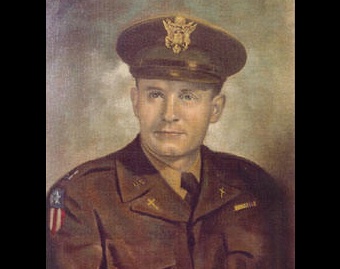
Today President Barack Obama posthumously awarded the legendary Roman Catholic priest from Pilsen, Kansas, the nation’s highest military honor, making him the sixth chaplain to receive the Medal of Honor.

Chaplain (CPT) Emil Kapaun was posthumously awarded the medal of honor for his selfless service and heroic efforts during the Korean War.  He repeatedly risked his own life to aid wounded soldiers and keep their faith while in captivity.

During the Battle of Unsan, Kapaun was serving with the 3rd Battalion of the 8th Cavalry Regiment. As Chinese Communist forces encircled the battalion, Kapaun moved fearlessly from foxhole to foxhole under direct enemy fire in order to provide comfort and reassurance to the outnumbered Soldiers. He repeatedly exposed himself to enemy fire to recover wounded men, dragging them to safety. When he couldn’t drag them, he dug shallow trenches to shield them from enemy fire. As Chinese forces closed in, Kapaun rejected several chances to escape, instead volunteering to stay behind and care for the wounded.

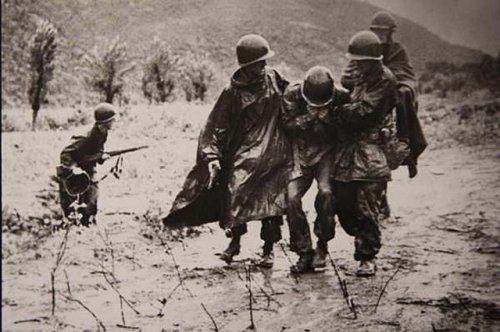
Herbert Miller remembers the first time he saw Chaplain Kapaun.  It was November 1950 and Miller, an Army sergeant, had a gun pointed at his head by a Chinese soldier.  Miller lay in a frozen, blood-stained ditch in North Korea.  Hit by a hand grenade, his ankle broken, Miller figured he was a goner.  But then, seemingly out of nowhere, a soldier bearing a small cross on his helmet appeared.

“Chaplain Kapaun came from across the road,” Miller recalled. “He pushed that man aside. He picked me up and carried me. We were both captured at that time.  “I kept telling him, ‘You can’t carry me like that. You put me down,’ ” Miller said, worried he was too much of a physical burden for the slender Kapaun. “He said, ‘If I put you down, they’ll shoot you.’ ”

After he was captured, Kapaun and other prisoners were forced to march into enemy territory toward prisoner-of-war camps. During the march Kapaun led by example in caring for injured Soldiers, carrying the wounded on stretchers, and encouraging others to do their part.

Once inside the dismal prison camps, Kapaun risked his life by sneaking around the camp after dark, foraging for food, caring for the sick, and encouraging his fellow Soldiers to sustain their faith and their humanity. On at least one occasion, he was brutally punished for his disobedience, being forced to sit outside in subzero weather without any garments. When the Chinese instituted a mandatory re-education program, Kapaun patiently and politely rejected every theory put forth by the instructors. Later, Kapaun openly flouted his captors by conducting a sunrise service on Easter morning, 1951.

After coming down with a bout of dysentery accompanied by pneumonia, Kapaun was sent to the camp’s “hospital,” which POWs called the “death house,” a place with little-to-no medical care. As he was being carried to the hospital, he asked God’s forgiveness for his captors, and made his fellow prisoners promise to keep their faith.   Kapaun died two days later, on May 23, 1951, at the age of 35.

Chaplain Emil J. Kapaun repeatedly risked his own life to save the lives of hundreds of fellow Americans. His extraordinary courage, faith, and leadership inspired thousands of prisoners to survive hellish conditions, and retain their faith in God and country.

kapaun

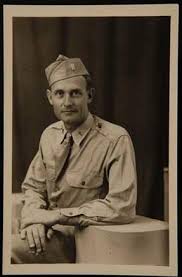
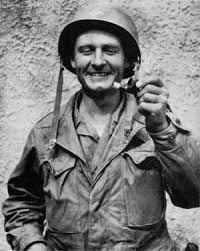
Thursday will mark another milestone for Army chaplains.  Chaplain (CPT) Emil Kapaun will receive the Medal of Honor posthumously for his heroic and selfless acts of November, 1950.

Kapaun was a Kansas native.  He was born on April 20, 1916 and was raised on a farm near Pilsen.  In 1940 he was ordained as a Roman Catholic priest at what is now Newman University in Wichita, Kansas.  He became a military chaplain with the US Army in 1944.  He was sent to India and served in the Burma Theater.  He was one of many chaplains who rejoined the military during the early days of the Korean War.

Below is a column from Mark W. Johnson, Ph.D., Branch Historian, U.S. Army Chaplain Corps, describing the events and lives of eight Army chaplains during the early part of that conflict.

Under Fire:  Chaplains in Korea, 1950


jeep-kapaun

The start of hostilities in Korea during June 1950 caught most American officials off guard, and those in charge of the U.S. Army Chaplain Corps were no exception. For the previous five years, America’s military focus had been on divesting itself of the huge force that had been employed during World War Two. There were 8,141 Army chaplains on active duty as that war ended in 1945; by the end of 1947, only a little more than 1,100 remained. Nearly 500 of those transferred to the recently-established U.S. Air Force in 1949. On the eve of the North Korean attack on South Korea, there were 706 active duty Army chaplains, with more in the National Guard and U.S. Army Reserve.

With war again a reality in 1950, the Army had to rapidly expand. Having just gone through the painful process of involuntarily releasing chaplains from active duty and forcing them into reserve status, the Chaplain Corps now had to reverse the process and recall reserve chaplains to active duty. Chaplain authorizations would more than double in the coming years, topping out at 1,618 in 1953. Even though numerous chaplains entered the active force through reserve component mobilizations, individual recalls, and an intense recruiting effort, the number of chaplains serving never matched what was authorized. Many veterans of World War Two were understandably reluctant to volunteer for combat duty again, and popular support for the war would wane during its final years as the conflict devolved into a stalemate.

kapaun-bike

While America mobilized in 1950, America’s Army went to war. The first American ground forces to deploy to Korea were the divisions that had been stationed in Japan as occupation forces following World War Two. In trying to stem the tide that was the North Korean invasion of South Korea, many hastily-deployed American units found themselves in desperate situations; it often came down to more of a battle for survival than it was an attempt to inflict harm on the enemy. Chaplains assigned to those units found themselves spending far more time comforting the wounded and praying for the fallen–and trying to evade capture–than they did in ministering to the living.

The first chaplain to serve in Korea deployed there with the initial American ground force to enter the conflict: Task Force Smith, an under strength battalion of the 24th Infantry Division’s 21st Infantry Regiment. The battalion’s chaplain, Carl R. Hudson, had been looking forward to a routine tour of garrison duty in Japan upon his assignment to the unit a few weeks beforehand. Chaplain Hudson and the rest of the task force’s 540 soldiers had little time to do anything after settling into a defense position just north of the town of Osan during the early morning hours of July 5, 1950. A large force of North Korean tanks and infantry attacked just a few hours later. By early afternoon the task force was completely overrun, its survivors scattered. Chaplain Hudson, along with the battalion’s surgeon and a large group of walking wounded, spent most of the following night and day making their way southward to the safety of the nearest American unit.
kapaun-carry

Other chaplains of the 24th Infantry Division had experiences similar to that of Hudson during that difficult month of July 1950, narrowly escaping as one American position after another fell before the North Korean advance. All survived, with the exception of Chaplain Herman G. Felhoelter of the 19th Infantry Regiment. With his battalion falling back as the American position along the Kum River collapsed, Felhoelter volunteered to remain behind with a group of critically wounded men. A North Korean patrol came upon the group and executed the prostrate soldiers and their praying chaplain. Felhoelter was the first of twelve chaplains to die in action or as a prisoner during the Korean War. The second also perished in July 1950, when Chaplain Byron D. Lee of the 35th Infantry Regiment (25th Infantry Division) was mortally wounded during an attack from an enemy aircraft.

Amazingly enough, no chaplains were captured during those confusing initial months of the Korean War despite all the American setbacks. That would change within a few months, however. After the front stabilized at the Pusan Perimeter and then the Inchon Invasion changed the strategic focus of the war, during the final months of 1950 American units and other forces of the United Nations command no longer retreated but instead advanced deep into North Korean territory. China entered the war in October 1950, when American and South Korean troops approached the Yalu River, the border between Korea and China. The first major American-Chinese clash took place near the town of Unsan during the first week of November, when a powerful Chinese attack overwhelmed the 1st Cavalry Division’s 8th Cavalry Regiment. The regiment’s battered 1st and 2d battalions managed to withdraw, but the 3d battalion was surrounded and largely annihilated. The 3d battalion’s chaplain, Emil J. Kapaun, was captured.
kapaun-sit

The 1950 Chinese counteroffensive generated heavy casualties on both sides. Within a month of Kapaun’s capture, three more chaplains also became prisoners of war: Kenneth C. Hyslop (19th Infantry Regiment), Wayne H. Burdue (2d Engineer Battalion, 2d Infantry Division), and Lawrence F. Brunnert (32d Infantry Regiment, 7th Infantry Division). Two other chaplains were killed during those weeks: Samuel R. Simpson (38th Infantry Regiment, 2d Infantry Division) and James W. Conner (31st Infantry Regiment, 7th Infantry Division). The fate of the four captured chaplains was unknown until the release of surviving American prisoners in 1953. Sadly, none of the four chaplain POWs survived their incarcerations.

For the opening battles of the Korean War, as with most wars, those who are already in uniform at the start of the conflict bore the burden of the opening battles. The eight chaplains lost in 1950 were all members of the pre-war Chaplain Corps. Six were veterans of World War Two. Burdue, Lee, and Simpson had served continuously since the 1940s without a break in service. Hyslop, Kapaun, and Felhoelter also served in World War Two, but were released from active duty in 1946. Within two years, however, they decided to continue their service to God and country; all three volunteered for recall to active duty in 1948. Conner and Brunnert joined the others in the pre-war era, being commissioned in 1948 and 1949 respectively.
kapaun-pipe

None of these eight veteran chaplains knew what the year 1950 would bring, but all rose to the challenges that came with ministering to Soldiers under fire. Only a few received public recognition for the actions that ultimately cost them their lives: Conner was awarded the Silver Star, Felhoelter the Distinguished Service Cross, and Kapaun received numerous awards. It is safe to say that all eight earned the undying thanks and gratitude of the Soldiers they served–the only award for which any of them would have asked.

SAAM

April is sexual assault awareness month.  The goal of SAAM is to raise public awareness about sexual violence and to educate communities and individuals on how to prevent sexual violence.

I understand this is not an easy topic to address, but sexual assaults can no longer be considered a taboo subject.  Silence is not an option.  It will only make the issue worse in communities, desensitize people to bad actions, discourage reporting, and slow response times.  Everyone has a responsibility in stopping assaults.  We must make every effort to increase awareness and prevention no matter where we live.

Human resource bulletin boards can no longer be the only place where respect is addressed as a value.  Congregations must strive to establish a climate of respect and teach others how to practice the love of Christ.  Churches are ideally places where victims of sexual assault receive the care and support that they need.

It is critical that churches, staff members, leaders, and parents take a stand for what is right during the month of April.  Together we can highlight sexual violence as a public health, human rights, and social justice issue and reinforce the need for prevention efforts.

Here are five suggestions on how we can incorporate SAAM activities in the community.

1.  Create a resource list.  What shelters, crisis centers, and medical clinics exist in your community?  What organizations are available to help assault victims?  Make sure that people know who to contact should an incident occur.  Church leaders may need this person or organization on speed dial.  Be sure to have a resource listed on your cell phone should someone need immediate help.

2.  Talk to your youth groups.  Tell these new and growing Christians why all people deserve respect and courtesy.  Jesus should not be to only voice to share the Golden Rule.  Kids need to hear solid reminders based on our faith.  The world is always ready to give an alternate view on dating, relationships, and much, much, more.  As church leaders, it is our duty to educate the next generation.  Teach your youth that everyone deserves an environment of mutual respect, dignity, and fair treatment.

3.  Demonstrate what “right” looks like.  You may need to stop an inappropriate joke from being told or challenge wrong comments.  Don’t wink at wrongs when they happen around you.  Silence is not consent, but Christians are called to shine the light of Jesus.  Help to draw a bright line between right and wrong no matter where you are.

4.  Organize a collection drive.  Collect necessary items for the local YMCA, YWCA, domestic violence shelter, crisis center, medical clinic, or hospital.  They frequently need clothing, toiletries, and supplies when assault victims seek emergency shelter or medical care.  Make an effort to highlight the needs in your congregation.  It also reminds families that crisis centers, clinics, and shelters exist in the community.  Families can also take comfort in knowing that resources will be available should they need future assistance.

5.  Host an open house.  An open house provides an opportunity for your congregation to provide valuable information with members and the people in your neighborhood.  Make brochures and educational information available.  Be sure to provide information about volunteer opportunities.  Invite the people and organizations on your new resource list to set up a booth or share how they provide a community service.  Publicize the open house in newspapers, on radio stations, and online.

Broken families and relationships are too common in our age.  Congregations can be the loving, caring, and healing communities that assault victims need during a time of crisis.  Churches can also step up and address the issue to prevent future incidents.  We can make a difference locally and help to create a community-wide response.  Take the time to highlight SAAM and shine the light of Christ where you are.

Bible

Hollywood can say what it wants, but The Bible is the top-rated cable program on Sunday nights.

The History Channel’s mini-series The Bible drew an impressive 14.1 million viewers on its first night.  Horizon media, meanwhile, said some 50 million viewers tuned in to at least some portion of the program over the first three weekends of the five part series.

The show is an outright success.  The latest installment pulled in 11 million viewers and audience retention rates are just as remarkable. To put the numbers into perspective, the premier had better ratings than The Walking Dead and every episode beat Fox’s American Idol.  If the ratings don’t impress you, they certainly confound Hollywood’s entertainment experts.

This Judeo-Christian-themed show reveals an appetite for religious programming that is consistently overlooked in Hollywood.  Did they forget that The Passion of the Christ made over $600 million to become the highest grossing R rated film in history?  Did they also miss The Chronicles of Narnia, Courageous, and Fireproof?

Some critics claim that the calendar is artificially inflating interest around the series.  I don’t see how this argument holds water.  Sure the mini-series airs during Lent and will end on Easter Sunday, but that does not speak to the desire for clean stories and religious programming every day of the year.  The content is drawing the audience, not the calendar.  Content is what drew people to the show and developed a loyal following.

The series is truly unique in that the creators wanted to honor the integrity and accuracy of Scripture.  Nancy Dubuc, president of the History Channel, told MovieGuide.com that a group of theologians and scholars were regularly consulted on the accuracy of the project. “This is probably the most important book in mankind, regardless of your beliefs or religious affiliation,” Dubuc says. “We spend a lot of time talking about this book, and probably not enough time knowing what’s in it.”

Again, that is the entire point.  People are curious about the Old Testament, the New Testament, and how the Bible impacts us.  While Hollywood has not cracked the code, people want to connect with the story of God.

Thanks to the History Channel and The Bible leadership team, people are watching the series, having conversations about the text, and finding out what the story of God holds for them.  That is the ultimate success no matter how the ratings turn out next week.