Feeds:
Posts
Comments

Posts Tagged ‘army’

chaplain crest

The Army Chaplain Corps was born on July 29, 1775.  The start of the Chaplain Corps came six short weeks after the Continental Congress established the Army. General George Washington formed the infantry as the first branch of the Army. Soon after this, he saw the need for ministers to care for Soldiers and go into battle directly with units during the American Revolution. General Washington’s concern for the care of his troops quickly brought creation of the second branch, the US Army Chaplain Corps.

The Continental Congress officially recognized chaplains in the national army with the rank of Captain.  Congress later passed the “Chaplaincy Act” on January 16, 1776, authorizing one chaplain for every two regiments. Pay was set at thirty-three dollars and thirty-three cents a month.  While the pay scale and uniform has certainly changed, the need for military ministry has not.

Since the start in 1775, approximately 25,000 Army Chaplains have served as religious and spiritual leaders for 25 million Soldiers and their Families. From military installations to deployed combat units and from service schools to military hospitals, Army Chaplains and Chaplain Assistants have performed their ministries in the most religiously diverse organization in the world.

Always present with their Soldiers in war and in peace, Army Chaplains have served in more than 270 major wars and combat engagements. Nearly 300 Army Chaplains have laid down their lives in battle. Seven have been awarded the Medal of Honor. Currently, over 2,900 Chaplains are serving the Total Army representing over 130 different religious organizations.

Pray for the men and women who bring God to Soldiers and Soldiers to God.  They are the servants who nurture the living, care for the wounded, and honor the fallen. May their actions, words, deeds, and ministry efforts continue to live up to the Chaplain Corps motto, “Pro Deo et Patria,” which means, “For God and Country.”

Read Full Post »

Hood

It has been nearly four years since Major Nidal Hasan was arrested for killing over a dozen Soldiers and military personnel at Fort Hood, Texas. During that time, he continued to receive his military paycheck.  That figure is now over $300,000. Members of Congress are trying the change that.

New legislation, called the “Stop Pay for Violent Offenders Act” was introduced Monday in the House of Representatives. It would authorize the military to suspend pay for Hasan and other members of the military for any capital or sex-related offense.

Currently there is no way to stop paying Soldiers as they sit in jail.  The Army cannot stop paying Hasan, who is still officially in the Army, at his usual pay grade unless he’s convicted.

The pay issue has garnered national attention for many reasons.  The long wait for a trial, no rules prohibiting or stopping military pay while in jail, and the large dollar amount continue to haunt the Army and its leaders.  While Hasan continues to draw about $80,000 per year, many of the Fort Hood victims say they’ve been denied financial and medical benefits due to the military’s refusal to categorize the massacre as an act of terrorism, instead trying to classify it as “workplace violence.”

The new legislation is cosponsored by Rep. Frank Wolf (R-Virg.), Rep. Tim Griffin (R-Ark.), and Rep. Tom Rooney (R-Fla.), who served in the military at Fort Hood before entering politics.

Hasan’s trial is set to get under way on August 6. He is charged with premeditated murder and attempted murder.

The long wait for action and moral outrage with military justice has also spilled over to sexual assault cases within the Department of Defense.  Frustrated with the high number of sexual assaults, a low prosecution rate, and few convictions in the military, many legislators are trying to change DOD policies to re-balance the scales.

The new legislation, which also targets those accused of sex-related crimes, comes after recent Congressional hearings derided the military’s response to sexual assaults.  A recent Pentagon report estimated 26,000 sexual assaults took place last year.

I can see plenty of reasons to be upset, frustrated, outraged, or just plain angry while reading this article.  No one would expect to lose a Soldier by the hands of another service member.  No one should wait four years for a trial to provide closure and healing regarding the loss of a loved one.  No one should expect the government or the Army to lessen that loss by classifying the actions as “workplace violence.” And who would ever expect that the shooter would earn over $300,000 during the wait for trial?  The issues at hand focus greatly on justice, making things right, responsiveness to military families and victims.

The story is truly upsetting.

Victims of violence and family members need our care.  The Fort Hood shooting and sexual assaults are two horrible injustices in our world.  These incidents should call the military community to be responsive and compassionate to those who have endured such atrocities.  As people of God, it is okay to feel outrage when wrongs are done, but there must be action to shine the light of Christ where victims feel no hope.  James chapter two shares that, “faith without works is dead.” There must be a spiritual call to action in the heart of believers.

Let us find ways to minister to the hurting families and victims of abuse.  Let us keep them in prayer as trials and testimonies recount days of heartache and despair.  Let us reach out and be responsive even when our government does not.  May God allow us to be a redemptive instrument in His world and respond to the injustice and hardship that we see.

Read Full Post »

New Army PT Uniform

PT Uniform


Somewhere a Command Sergeant Major is finally happy!

Read Full Post »

IMG-20130621-00026

Can you teach an Army chaplain new tricks?

That seemed to be the question for our class at the brigade chaplain course.  The last couple of weeks at Fort Jackson were a strange odyssey to say the least. Everything was new and I felt old.  Perhaps ancient would be a better word after seeing some of the newly commissioned lieutenants.  For someone who entered the Army in 2000, little looks the same.

Religious support training and staff officer work before 9/11 consisted of battle books with three-ring binders stuffed full of paper with colored tabs.  The war years changed resources to compact disks, thumb drives, and websites.  It seems like nearly everything has changed since I learned to wear a set of battle dress uniforms, BDUs, and shine my boots.  Heck, even the chaplain school changed.  It is now a joint facility shared with the Navy and the Air Force chaplain corps.  And let me tell you, I don’t even know how to speak Navy!  Water talk is not in my vocabulary.

2013 and the post war years will ultimately usher in another round of change. Today, battle books exist in the cloud.  Field Manuals are now boiled down to fifty documents.  Digital references and documents will be downloaded and viewed on portable electronic devices.  We now conduct Soldier Leader Engagements instead of Key Leader Engagements.  And yes, no one wears BDUs any longer or shines boots. It has all changed.

That was a major take away from the course.  Chaplains, and the Army, must learn how to prepare for, balance, and conduct operations among change.  In an age of satellites, drones, and cyber commands, change is inevitable.  President Woodrow Wilson once exclaimed, “We won the war to end all wars!”  The comment seemed valid at the time, but today it is used in a disparaging way to highlight people being short-sighted.  When you hear the statement now, it just reinforces the idea that change is heading your way.

While all of this change can seem overwhelming, ministry has not changed, nor the need to give religious support to Soldiers and military families.  Sure services, tools, resources, and items may have changed, but the concept of ministry has not. People need the Lord.

Apps, mp3 players, and Skype are great new ministry tools, but ministers, pastors, and priests are still needed to share the life changing message of Christ.  Military chaplains will continue to use new ministry tools and resources, but the mission of our calling has not changed.  Sharing the gospel with a dark and sometimes unwelcoming world is the Great Commission work that we are called to perform.  It is our duty to remain faithful and true to Christ in all we do and say.

While the Army has certainly changed since 2000, a few things will not change.  God reigns.  His love is unfailing.  Christ provides redemption and salvation.  Thank God these things will never change.

Read Full Post »

PX

Congress and the administration continue to seek answers in fighting military rape and sexual assaults.  As part of the sexual assault reduction effort, service chiefs instructed commanders to remove offensive and degrading material from military offices and workplaces.  This written policy required units to remove pornographic and offensive material like, “books, pictures, photographs, calendars, posters, magazines, videos . . . .”

While this is a good reminder on maintaining an appropriate work area and promotes equality, it seems highly contradictory to continue selling pornography on military installations when it is not allowed in other public areas.

Army, Air Force, Navy, and Marine Exchanges continue to sell inappropriate magazines which treat woman as little more than objects for sexual pleasure. Please keep in mind that this smut is located in aisles where service members, spouses, families, and kids walk past every day.  While a placard may be present to hide the magazine cover, pornography continues to be sold on US military installations across the globe.

It is high time for this practice to stop.

If the military is truly concerned about this fight, then let us attack the attitude that allows sexual exploitation in the first place!  Let us create a better environment where people can truly be seen and respected as equals.  If pornography cannot be allowed in the workplace, why is it allowed in every government-sponsored store on post?

While pornography is not the sole cause of sexual assaults in the military, it is degrading the environment for women in the force and polluting a military climate built on respect, service, and integrity.

Many will call me outdated, old-fashioned, pre-historic, a Bible thumper, a religious zealot, or worse.  I have big shoulders if folks disagree, but pornography is part of the problem with our military culture.  We also deserve consistent policies guiding its removal.  If Big Army is listening, it is time to remove pornography from the PX.

Read Full Post »

Enduring Freedom

Most service members think about spiritual matters during deployment.  We take stock of our lives while in the face of death and danger.  This time of examination and spiritual questioning is important.  Rarely do we stay the same afterward.  This time of spiritual searching will frequently send service members in one of two distinct directions.  Many gain a stronger relationship with God.  Others may question their beliefs and feel spiritually empty.

For those who may be in the later category, I want you to know that it is normal to ask questions about our faith.  Spiritual matters are important downrange, when we have returned home, and as we reintegrate into our communities.  Everyone is impacted differently by war.  We have endured different levels of strife and conflict. We also have different levels of spiritual understanding when we enter the combat zone and when we leave.  Regardless of your location or when you served, your faith will be different when you come home.

No matter if your faith has grown or shrunk, it is important that you continue moving forward in your Christian walk.  Do not stand still in your faith.  1 Timothy 4:7b-8 shares, “rather, train yourself to be godly. For physical training is of some value, but godliness has value for all things, holding promise for both the present life and the life to come.”

Every believer, civilian or veteran, needs a spiritual fitness routine.  Like physical fitness, spiritual fitness must be practiced.  While it is different from going to the gym and lifting weights, the concept is the same.   We need to exercise our spiritual muscles in order to grow our faith.

Spiritual fitness can take place in many different ways:

  • prayer
  • reading scripture
  • attending worship services
  • seeking spiritual counsel
  • fellowship
  • meditation
  • journaling

This is a small, but important sample of spiritual exercises that you can try.  Feel free to try one and gradually combine others to your list.   You can also participate in these activities with your family, friends, and a Christian community of believers, adding a greater dimension to your spiritual fitness by increasing your connection to other people.

Spiritual fitness is important to everyone.  It draws us closer to God, forms us in the image of Jesus Christ, and allows us to strengthen our faith.  Your spiritual fitness also affects your ability to deal with stress and times of crisis.  Multiple studies determined that veterans who have an active spiritual practice report fewer and less severe post-traumatic stress disorder (PTSD) symptoms.  Those who struggled with their faith or felt alienated from God had more severe PTSD symptoms.

Spiritual fitness also reduces anxiety, loneliness, and depression.  Studies have also documented how people with a weekly pattern of attending worship services live longer, are healthier, and recover from illness more quickly.

Veterans and service members can take comfort in the transforming power of God. No matter where or when you were deployed, God still cares about you.  No matter what you saw downrange or what you did, you can have a redeemed life.

When life seems full of despair, the Lord shares purpose, meaning, forgiveness, and acceptance.  Continue to move forward in your faith.  Train yourself to be the godly and righteous person you were called to become.

Read Full Post »

memorial_day

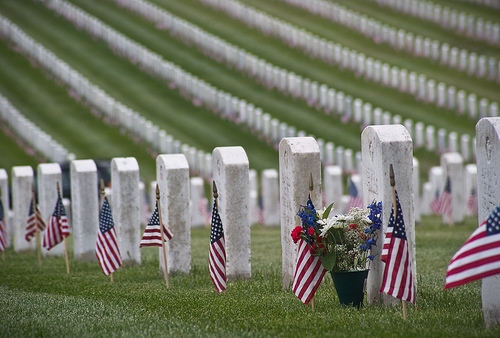
For many, this weekend marks the beginning of summer.  It will entail a trip to the lake, a national park, or just staying home to grill some brats. Others will attend patriotic parades, decorate grave sites, fly the American flag, or participate in a Memorial Day event.    

It is a weekend when we remember those who have died defending our nation, our freedom, and our principles.  It is estimated that nearly 1.3 million service members have died and an additional 1.5 million service members were wounded fighting for our country.  Speakers and politicians will highlight stories of sacrifice, selfless service, and love as essential values that create military heroes.  While people will point to battlefields, war zones, and far off foreign campaigns as the epitome of valor, these values have a greater beginning.

We understand sacrifice, selfless service, and love because of God.

John 3:16 shares, “For God so loved the world, that He gave His only begotten Son, that whoever believes in Him shall not perish, but have eternal life.”  God gave His Son as a sacrifice for the sins and wrongs of humanity.  This sacrificial gift shows the value and love that God has for us, His children.  Jesus Christ demonstrates this perfect and holy love by freely laying down His life for us.  He acts as a substitute, bleeds and dies on our behalf, so that we can benefit in life with the Lord.

It is a familiar story that we will hear about heroic Soldiers, Sailors, Airmen, and Marines.  It is the same reason that we hand out medals for bravery and valor.  But do not forget the one who died for you.  Many died for our freedom, but one died for our salvation.

Read Full Post »

buffalo

Now is a great time for military members and families to start planning your 2013 vacation.  If you want to see the great outdoors, consider visiting a National Park, National Forest, or Fish and Wildlife area this summer for free.

The National Park Service is offering free park passes at more than 2,000 federal recreation sites.  The park pass is available to US military members and their dependents in the Army, Navy, Air Force, Marines, and Coast Guard.  Members of the National Guard and US Reserves and their dependents are also eligible.

The park pass is good for a full twelve months across the country and is non-transferable.  It covers entrance to National Park Service and Fish and Wildlife Service sites that charge entrance fees. It also covers standard amenity fees at Forest Service, Bureau of Land Management, and Bureau of Reclamation sites. The pass admits the pass owner and accompanying passengers in a private, non-commercial vehicle, at “per vehicle” fee areas; or the pass owner, and up to three additional adults, at sites that charge per person. Children of age 15 or under are admitted free.

Annual park passes must be obtained in person at a Federal recreation site.  They are available to service members and dependents by showing a Common Access Card (CAC) or Military ID (Form 1173).  The Pass does not cover expanded amenity fees such as camping, boat launching, parking, special tours, special permits, or ferries.

This is another great way for America to say “thank you” to its defenders.  It is also a great way for service members to get out, relax, and enjoy some of the benefits of freedom that they preserve so well.

Grab a park pass this year and enjoy it to the fullest in 2013.

Read Full Post »

deployment

I have seen this list several times and wanted to share the photo.

If you have endured any of the above while down range, then this list might bring a smile to your face also.

Enjoy!

Read Full Post »

moh

Today President Barack Obama posthumously awarded the legendary Roman Catholic priest from Pilsen, Kansas, the nation’s highest military honor, making him the sixth chaplain to receive the Medal of Honor.

Chaplain (CPT) Emil Kapaun was posthumously awarded the medal of honor for his selfless service and heroic efforts during the Korean War.  He repeatedly risked his own life to aid wounded soldiers and keep their faith while in captivity.

During the Battle of Unsan, Kapaun was serving with the 3rd Battalion of the 8th Cavalry Regiment. As Chinese Communist forces encircled the battalion, Kapaun moved fearlessly from foxhole to foxhole under direct enemy fire in order to provide comfort and reassurance to the outnumbered Soldiers. He repeatedly exposed himself to enemy fire to recover wounded men, dragging them to safety. When he couldn’t drag them, he dug shallow trenches to shield them from enemy fire. As Chinese forces closed in, Kapaun rejected several chances to escape, instead volunteering to stay behind and care for the wounded.

Herbert Miller remembers the first time he saw Chaplain Kapaun.  It was November 1950 and Miller, an Army sergeant, had a gun pointed at his head by a Chinese soldier.  Miller lay in a frozen, blood-stained ditch in North Korea.  Hit by a hand grenade, his ankle broken, Miller figured he was a goner.  But then, seemingly out of nowhere, a soldier bearing a small cross on his helmet appeared.

“Chaplain Kapaun came from across the road,” Miller recalled. “He pushed that man aside. He picked me up and carried me. We were both captured at that time.  “I kept telling him, ‘You can’t carry me like that. You put me down,’ ” Miller said, worried he was too much of a physical burden for the slender Kapaun. “He said, ‘If I put you down, they’ll shoot you.’ ”

After he was captured, Kapaun and other prisoners were forced to march into enemy territory toward prisoner-of-war camps. During the march Kapaun led by example in caring for injured Soldiers, carrying the wounded on stretchers, and encouraging others to do their part.

Once inside the dismal prison camps, Kapaun risked his life by sneaking around the camp after dark, foraging for food, caring for the sick, and encouraging his fellow Soldiers to sustain their faith and their humanity. On at least one occasion, he was brutally punished for his disobedience, being forced to sit outside in subzero weather without any garments. When the Chinese instituted a mandatory re-education program, Kapaun patiently and politely rejected every theory put forth by the instructors. Later, Kapaun openly flouted his captors by conducting a sunrise service on Easter morning, 1951.

After coming down with a bout of dysentery accompanied by pneumonia, Kapaun was sent to the camp’s “hospital,” which POWs called the “death house,” a place with little-to-no medical care. As he was being carried to the hospital, he asked God’s forgiveness for his captors, and made his fellow prisoners promise to keep their faith.   Kapaun died two days later, on May 23, 1951, at the age of 35.

Chaplain Emil J. Kapaun repeatedly risked his own life to save the lives of hundreds of fellow Americans. His extraordinary courage, faith, and leadership inspired thousands of prisoners to survive hellish conditions, and retain their faith in God and country.

Read Full Post »

« Newer Posts - Older Posts »